- Home
- 5 Axis CNC machining
Master Complex Geometries: 5 Axis CNC Machining Services by InstaMFG
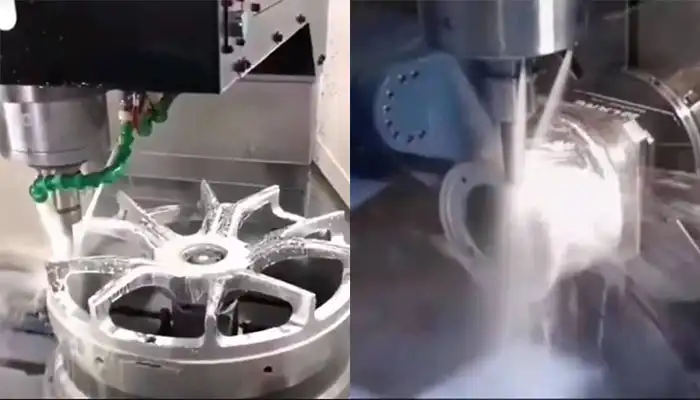
5-axis CNC machining combines three linear axes (X, Y, Z) with two rotational axes, allowing the cutting tool or the workpiece to tilt and rotate simultaneously. This capability minimizes setups, reduces cycle times, and delivers superior precision and surface finishes for complex geometries

What is 5 Axis CNC Machining & How It Works
At InstaMFG, our 5 axis CNC machining services represent the pinnacle of precision manufacturing, enabling us to produce parts with unparalleled complexity and accuracy. This advanced process combines three linear axes (X, Y, Z) with two additional rotational axes (A and B or C). This unique capability allows the cutting tool or the workpiece to tilt and rotate simultaneously, approaching the part from virtually any direction in a single setup.
This comprehensive motion not only minimizes costly setups and significantly reduces cycle times but also delivers superior precision, exceptional surface finishes, and the ability to create highly complex geometries that are impossible or inefficient with traditional machining methods. It’s the ultimate solution for high-precision complex parts and advanced manufacturing challenges.
Understanding the 5 Axes: X, Y, Z, A, and B
To fully leverage the power of 5 axis CNC machining, it’s essential to understand the roles of each axis:
X-axis: Left to right linear movement.
Y-axis: Forward and backward linear movement.
Z-axis: Up and down linear movement.
A-axis: Rotation around the X-axis, allowing the tool or part to tilt.
B-axis: Rotation around the Y-axis, enabling the table or spindle to rotate.
Unmatched Advantages of InstaMFG's 5 Axis CNC Machining Services
Reduced Setups & Faster Turnaround
Our 5 axis CNC machining services enable single-setup machining, drastically slashing setup time, eliminating errors from part re-fixturing, and significantly reducing labor costs. This translates directly into accelerated delivery schedules and a faster turnaround for your projects, from functional prototypes to production runs.
Unmatched Precision & Tight Tolerances
With simultaneous 5-axis motions, the cutting tool maintains optimal engagement angles with the workpiece throughout the entire process. This continuous control ensures unparalleled part accuracy and allows us to achieve tolerances as tight as ±0.002″ (±0.05 mm), crucial for highly intricate and complex geometries.
Superior Surface Finish for Ready-to-Use Parts
The ability to orient the tool optimally means continuous, smooth toolpaths that virtually eliminate tool marks and step-overs. This capability of 5 axis CNC machining produces mirror-like surfaces, often requiring minimal to no secondary polishing, leading to truly ready-to-use components straight off the machine.
Advanced Machining of Complex Geometries & Undercuts
Unlike traditional 3-axis centers, our 5-axis capabilities allow us to effortlessly machine highly intricate shapes, complex geometries, and deep undercut features. We regularly produce challenging parts like turbine blades, impellers, medical instruments, and freeform molds that would be impossible or prohibitively costly otherwise.
Broad Material Versatility for Diverse Applications
Our 5 axis CNC machining services are highly versatile across a vast range of materials. We efficiently work with robust metals such as aluminum, stainless steel, and titanium, as well as high-performance engineering plastics like PEEK, Delrin, and Ultem, ensuring we can meet the specific demands of your project.
Applications:
5 Axis CNC machining powers critical industries where complexity and precision converge:
Aerospace: Turbine blades, structural frames, and aerodynamic fairings
Automotive: Prototype manifolds, intake ports, and suspension components
Medical: Orthopedic implants, surgical instruments, and dental prosthetics
Mold & Die: Intricate mold cavities, cores, and undercuts in a single fixture
Process Workflow
1. CAD/CAM Programming
2. Fixturing & Zeroing
3. Rough Machining
4. Finish Machining
5. Inspection & Deburring
1. CAD/CAM Programming
Engineers create 3D models and generate simultaneous 5-axis toolpaths with advanced CAM software.
2. Fixturing & Zeroing
Secure part to a 5-axis table or tilting head; establish datum points for all five axes.
3. Rough Machining
High-feed strategies remove bulk material across multiple axes in one continuous program.
4. Finish Machining
Fine-cut passes achieve final dimensions and exceptional surface quality.
5. Inspection & Deburring
CMM and visual inspections verify tolerances; deburring ensures smooth edges.

We invest in the latest DMG MORI and Haas 5-axis centers, ensuring we have the most advanced technology…
Why Choose InstaMFG’s 5 Axis CNC Machining
Cutting‐Edge Equipment: Latest DMG MORI and Haas 5-axis centers. Expert CAM Programming: Optimized toolpaths for speed and accuracy. Strict Quality Control: In-house CMM inspection and traceability. Fast Turnaround & Scalability: From rapid prototypes to high-volume runs.
Innovative Digital Manufacturing: Revolutionizing Production
Insta MFG revolutionizes manufacturing with instant, high-precision digital solutions, streamlining design to production for modern industries.
Minimum Wall Thickness: Avoiding Warp & Vibration
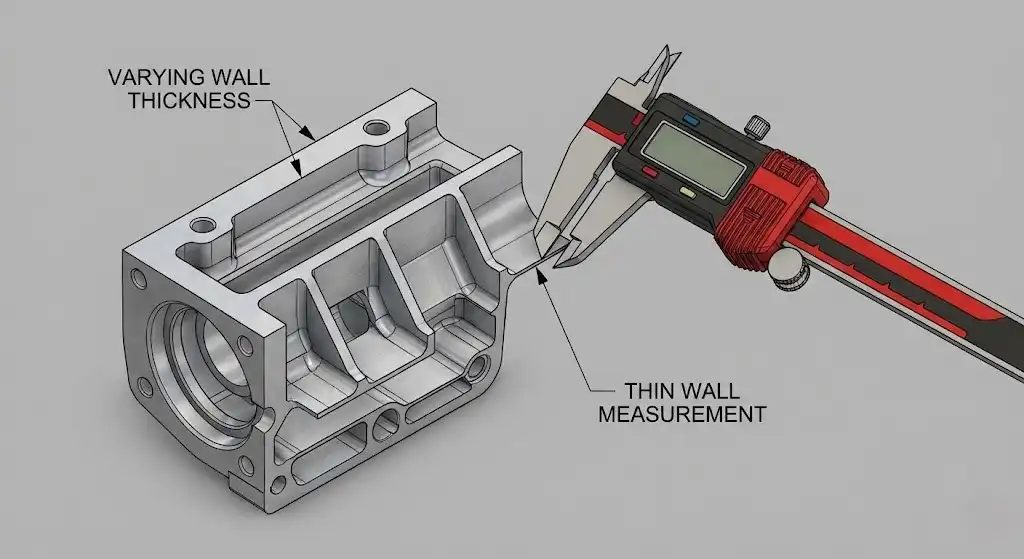
Design For Manufacturing Thin walls vibrate. Vibration causes chatter. Chatter ruins parts. Here is the safe limit for CNC machining. Designers love thin walls to save weight. Machinists hate them. When a CNC cutter engages a thin unsupported wall, the material pushes away (deflects) or vibrates. This leads to poor surface finish and dimensional inaccuracy.…
Designing Threaded Holes:Cut Taps vs. Inserts
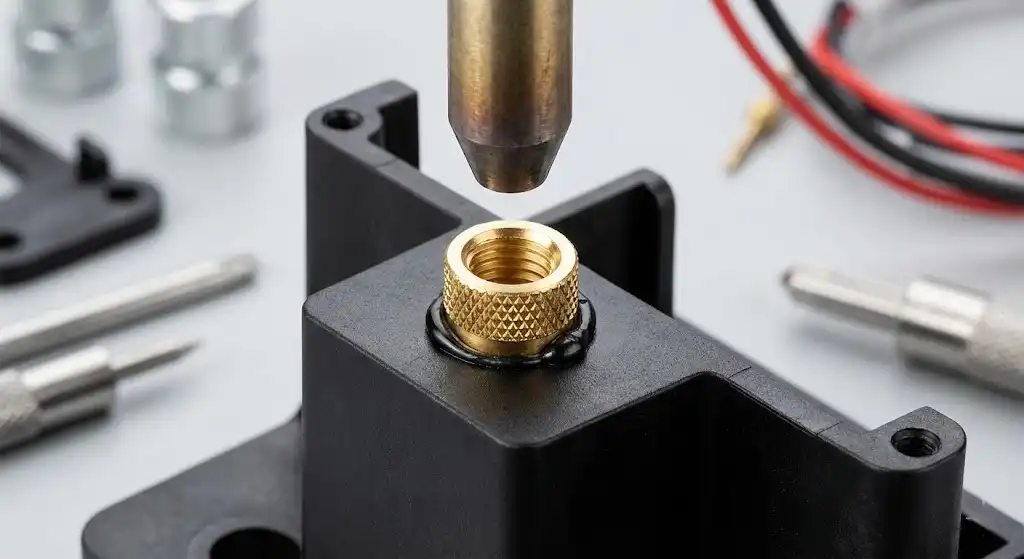
Design For Assembly Stop stripped threads. Learn the correct depth rules for metal and when to use heat-set inserts for plastics. A simple threaded hole causes 20% of scrap in CNC machining. Why? Because designers often specify threads that are too deep or use the wrong tap type for the material. Rule #1: Drill Depth…
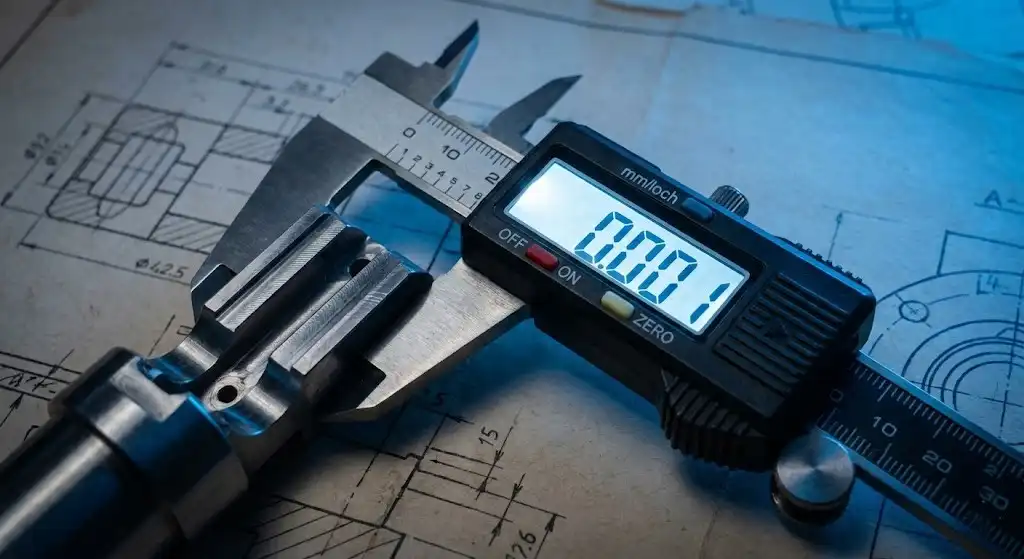
CNC Tolerances Guide:ISO 2768 & Precision Machining
Engineering Standards Why “±0.001mm” on every dimension kills your budget. A practical guide to GD&T and standard tolerances in China. In CNC machining, “Perfect” is the enemy of “Done.” Every decimal point you add to a dimension increases the cost exponentially. Understanding the balance between precision and price is key to effective sourcing. Standard Tolerances…
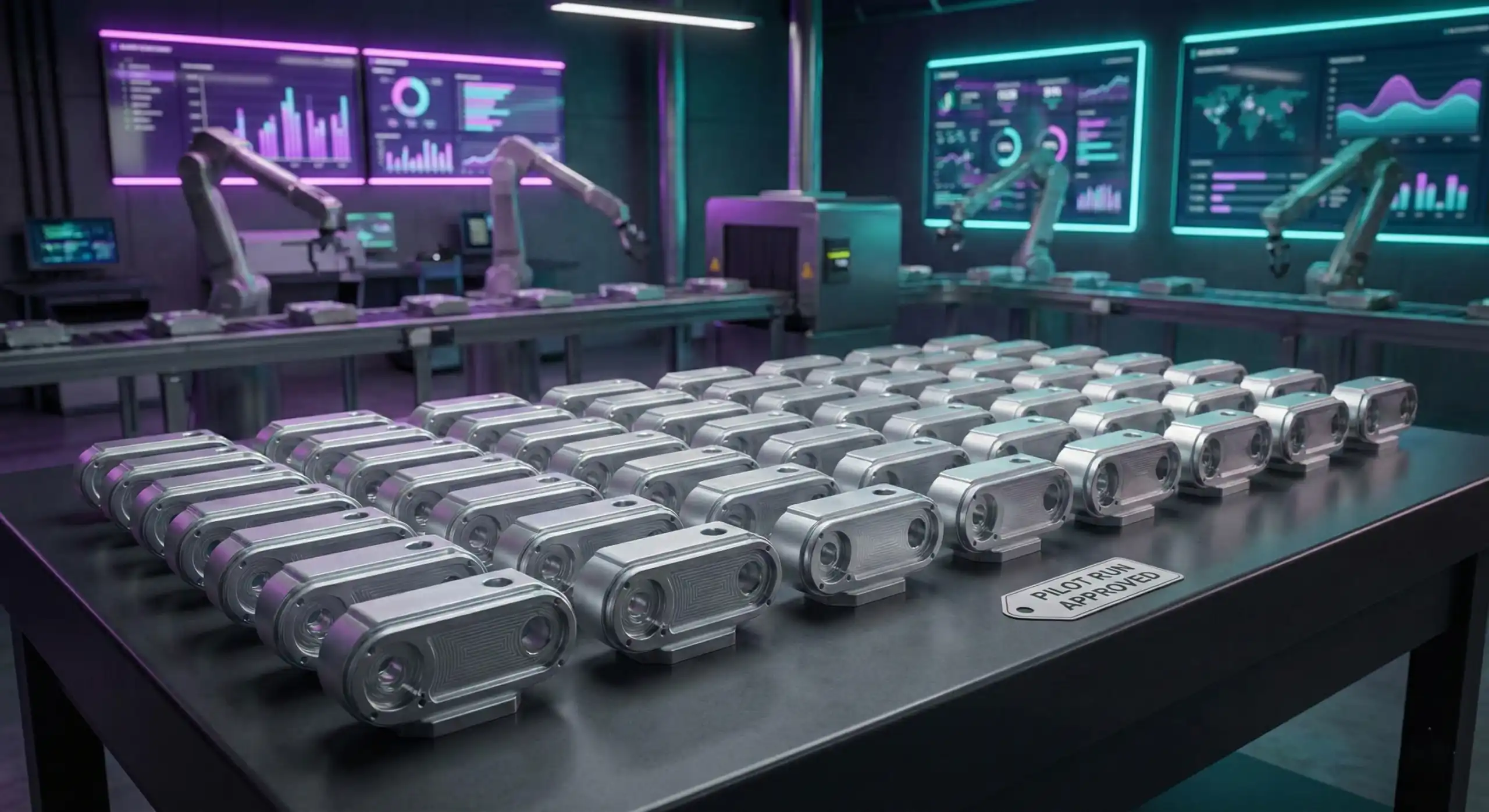
Injection Molding vs. CNC:The Break-Even Point
Injection Molding vs. CNC:The Break-Even Point Injection Molding vs. CNC:The Break-Even Point Manufacturing Strategy Why “Bridge Production” is the secret weapon for hardware startups to avoid high tooling costs. You have validated your prototype (1-5 units). You aren’t ready for mass production (10,000+). You need 200 units for a pilot run. This is the “Death…
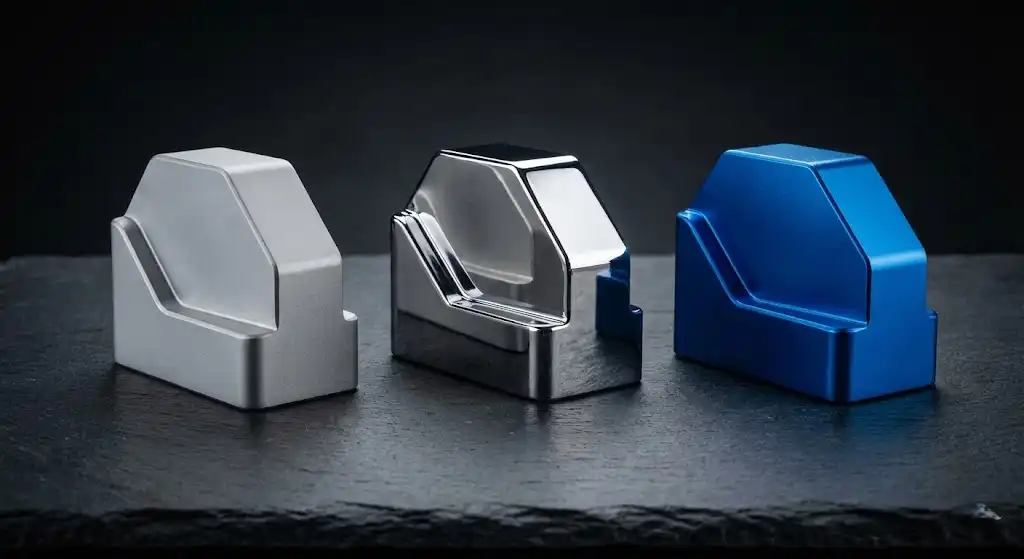
Balancing Aesthetics vs. Cost
Balancing Aesthetics vs. Cost Balancing Aesthetics vs. Cost Design For Manufacturing CNC Surface Finish Guide: Stop over-specifying. Learn when to use Ra 3.2 (As-Machined) vs Ra 0.8 (Polished) to save 20-30% on production costs. The most common cost-driver we see on technical drawings is an unnecessary global surface finish callout (e.g., “All surfaces Ra 0.8”).…
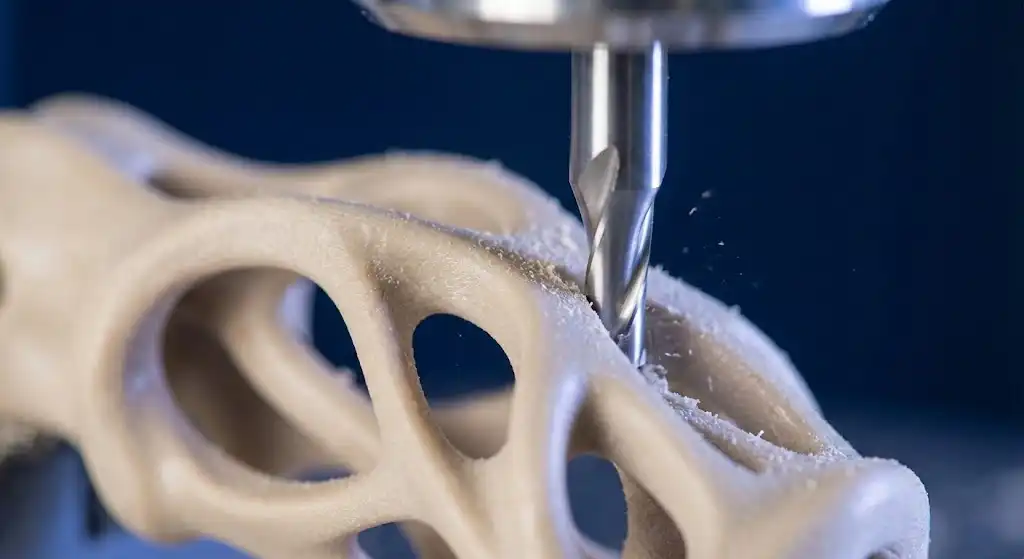
CNC Machining PEEK: Process Control for Critical Applications
Advanced Materials Series A technical analysis of tolerancing, stress relief annealing, and tooling strategies for high-performance thermoplastics. Polyetheretherketone (PEEK) bridges the gap between engineering plastics and metals. For engineers in the Medical Device and aerospace sectors, it is the gold standard. However, a common failure mode is dimensional instability post-machining. Material Grades: Virgin vs. Filled…
CNC Materials
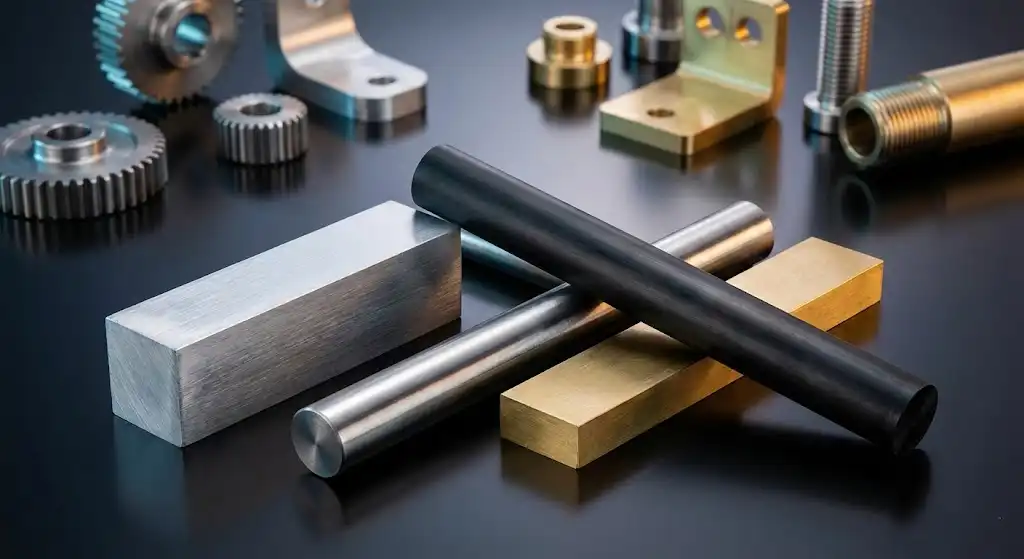
Engineering Resources Stop guessing. A data-driven comparison of Aluminum, Steel, Titanium, and Plastics to help you choose the perfect alloy for your industry. Choosing the right material is often a balancing act between mechanical performance and manufacturing cost. Over-engineer, and your unit price explodes. Under-engineer, and your product fails in the field. At InstaMfg, we…
Strategy: The Smart Way to Source Low-Volume Production in China
2026 Manufacturing S Why “Bridge Production” (50-500 units) is the secret weapon for hardware startups avoiding the “Death Valley” of high MOQ. Here is the classic hardware trap: You have validated your prototype (1-5 units). You aren’t ready for mass production (10,000+ units). You need 200 units for a pilot run or beta test. Most…
The Truth About Quality Control in Digital Mfg
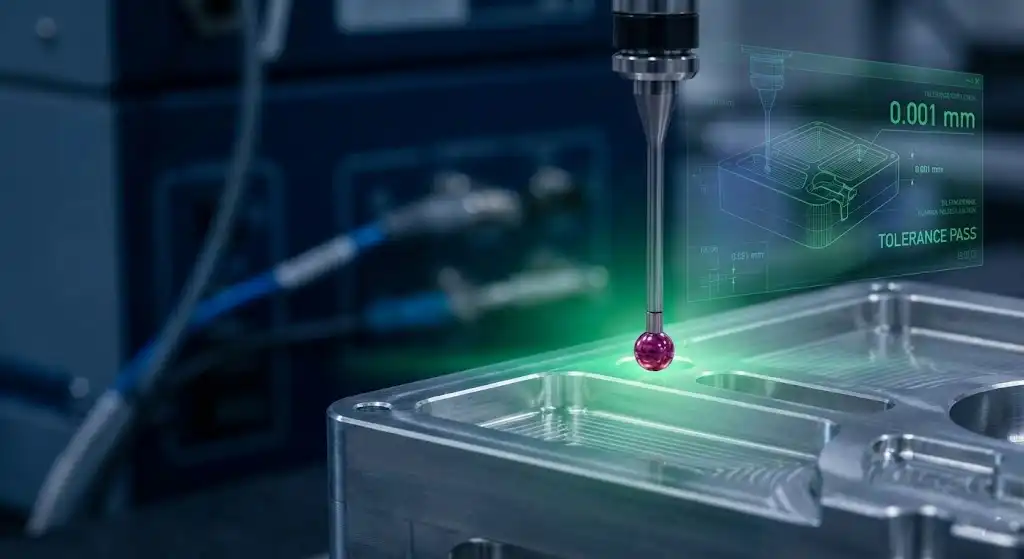
Quality Assurance (QA) How we use CMM inspections and OES material analysis to exceed ISO 9001 standards and eliminate the risk of offshore manufacturing. “Will the parts fit?” This is the single biggest anxiety for engineers outsourcing production. In the past, “Made in China” sometimes implied inconsistent tolerances. But in the era of Industry 4.0,…
5 Proven Tips to Slash CNC Machining Costs
Design For Manufacturing (DFM) Don’t let over-engineering kill your budget. Learn how Chinese smart factories optimize your CAD files for maximum savings without sacrificing quality. The price of a machined part isn’t random. It’s a direct result of three factors: Material Cost, Machine Run Time, and Setup Time. While you can’t control the market price…
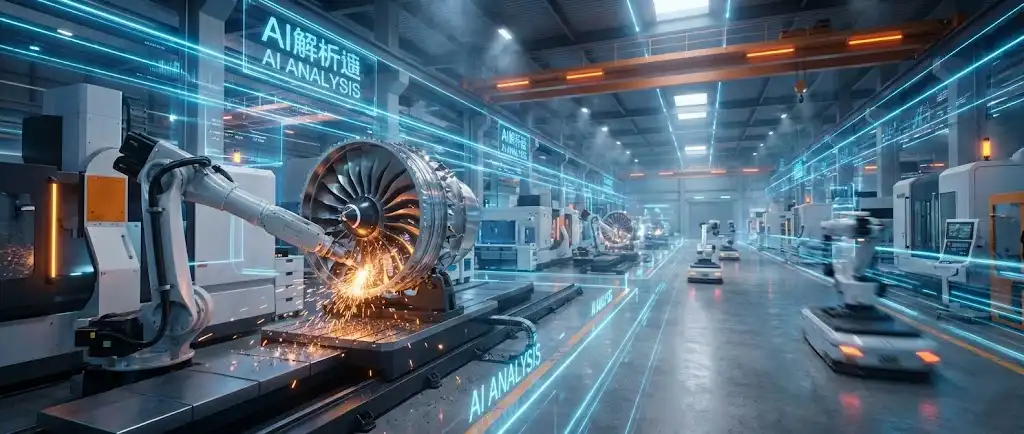
The Evolution of Instant CNC Manufacturing
The Evolution of Instant CNC Manufacturing The Evolution of Instant CNC Manufacturing Manufacturing Insights A technical deep dive into how AI-driven analysis and 5-axis automation are reducing prototype costs by 40% while maintaining ISO-certified quality. The manufacturing landscape has shifted. For decades, engineers accepted a trade-off: you could have parts fast, or you could have…

Digital Manufacturing in 2025: Driving Innovation and Efficiency
In 2025, digital manufacturing integrates AI, IoT, and digital twins to revolutionize production, enhancing efficiency, precision, and adaptability.


